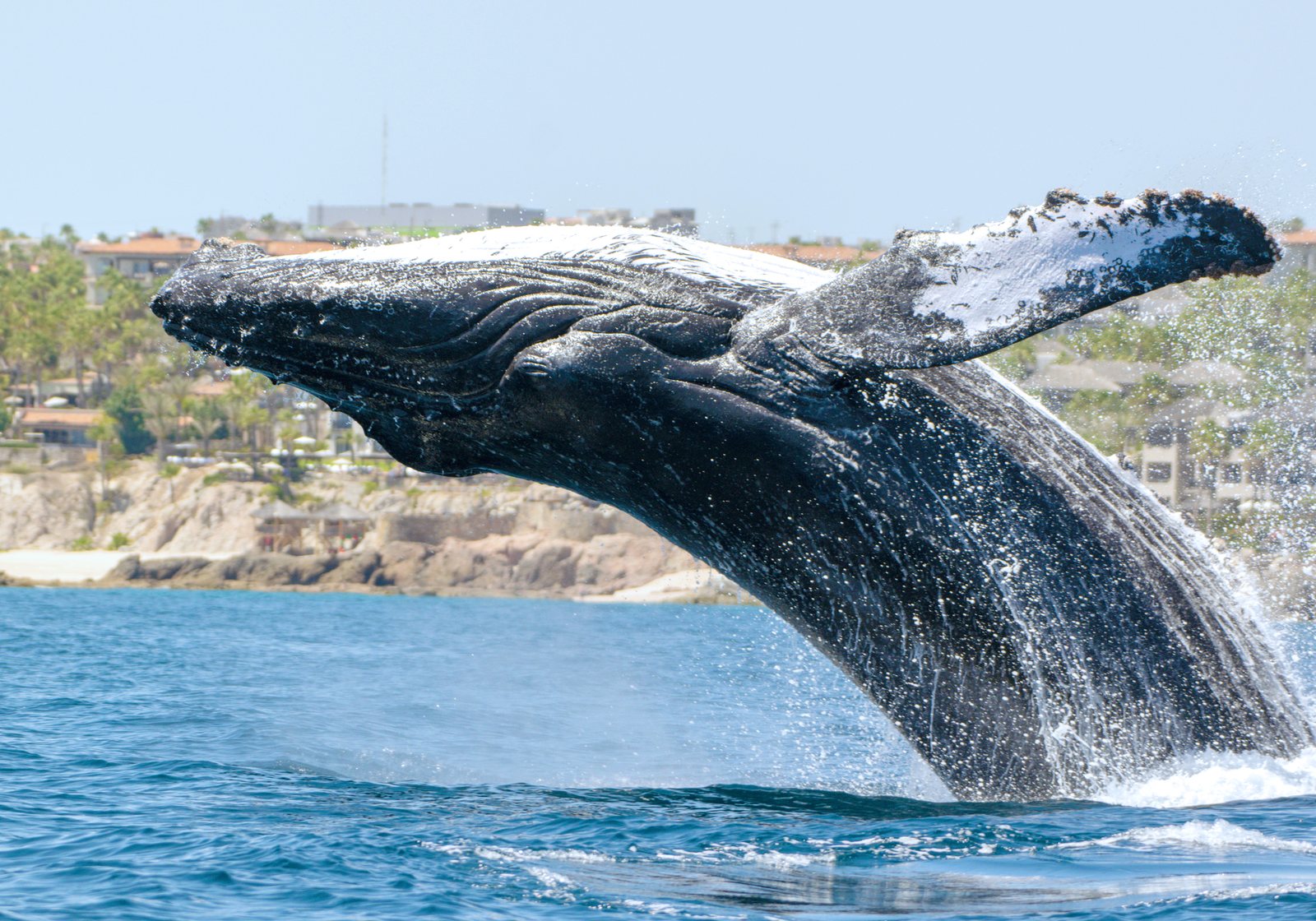
Whale watching season in Los Cabos runs December 15 to April 15. The most common species are the gray and humpback whale, which migrate from the Arctic to the Mexican Pacific to mate and give birth. Peak months are January and February (mothers with calves) and March, considered the best of the year, with over 95% sighting rates on guided tours. You can watch from a boat tour or from land —even from many terraces facing the Sea of Cortez along the Corridor and the Pacific side.
There's a moment, in January, that people who live in Los Cabos learn to wait for. You're having breakfast on the terrace, coffee still hot, and out over the blue of the Sea of Cortez something breaks the surface and vanishes. No boat, no tour required. The whale swam past the house.
Every winter, gray and humpback whales make one of the longest journeys in the animal kingdom: down from the frozen waters of the Arctic to the warm Mexican Pacific, to mate and give birth. They travel thousands of miles to do it here, at the tip of the peninsula, where the warm water welcomes the calves. And for four months, Los Cabos stops being only a golf-and-beach destination and becomes one of the best places on the planet to watch them.
When: the season, month by month
The official season runs December 15 to April 15. But not every month is the same, and it's worth knowing before you plan.
December is the start: the first whales arrive, in growing numbers. January and February are the heart of the season — this is when you see the most mothers with calves, a sight that's hard to describe until it's in front of you. And March, according to local operators, is the best month of the year: humpback concentration peaks, the sea is calm, and sighting rates on guided tours consistently top 95%. By mid-April, the whales begin their return.
What you'll see: two leads
The two most common species are the gray and the humpback. The gray travels in groups, calm, passing through. The humpback is the star of the show: it's the one that leaps —biologists call it breaching— throwing forty tons out of the water to land in an explosion of spray. It's also the most photogenic, and the reason so many people book the trip.
How to watch, done right
You can from a boat tour, which approaches at a respectful distance, or from land — a lookout, a high beach, or, if you're lucky, your own terrace. A tip locals give and brochures leave out: mornings tend to have calmer water and better visibility than afternoons. And it's worth choosing licensed operators, who keep their distance from the animals; in Mexico whale watching is regulated by season precisely to protect them.
Why this matters to someone thinking of buying
Nobody buys a house for the whales. But after a season here you understand something the property photos don't show: that certain Los Cabos addresses hand you, four months a year and at no cost, one of the most sought-after natural spectacles in the world. Terraces facing the Sea of Cortez along the Corridor and on the Pacific side become, between January and March, private box seats. It's the kind of detail that turns a second home into the home you always want to return to.
If you'll be in Los Cabos this season and want to know the areas where this show plays out from home, it's a good conversation to have before December begins.
Frequently Asked Questions
When is whale watching season in Los Cabos?
December 15 to April 15. The most active months are January and February, with many mothers and calves, and March, considered the best of the year.
Which whale species can you see in Los Cabos?
Mainly the gray whale and the humpback. The humpback is the most spectacular: it's the one that leaps out of the water (breaching) and the most photogenic.
Can you see whales without taking a tour?
Yes. Although boat tours get closer, in season they can be seen from lookouts, high beaches and many terraces facing the Sea of Cortez. Mornings tend to have better visibility.
Sources
Keep reading
Montealegre Luxury Homes
Are you considering a property in Los Cabos?
Speak with an advisor privately, with no obligation.
Contact an advisorGet the next article in your inbox